Thursday, May 2, 2013

New Kenyan lawmakers vote themselves free luxury car perk, worth $60,000

Barely a fortnight into their jobs, Kenya?s new lawmakers have forced through a change to their salary that includes a perk of $60,000 for a luxury car.

Under a review of legislators? earnings agreed in Kenya before the March national elections, salaries were agreed to be cut from $120,000 a year to $75,000, and perks including interest-free loans for vehicles and houses were to be scrapped.

The measures were necessary because under a new constitution that made structural changes including a new senate, the older wages for public servants were predicted to be unsustainable.

But part of those cuts are already being reversed. Kenyan budgetary officials were this week forced to backtrack and agree that the 416 new legislators will each be handed $60,000 for a new car.

RECOMMENDED: Think you know Africa? Take our geography quiz.

Rates for mileage driven while on official business have also almost doubled, to between $2 and $3.70 a mile, depending on the vehicle's engine size.

The move has been met with weary resignation ? and some anger ? among Kenyans who elected new members of parliament, hoping they might achieve a break from the pork and excesses of the past.

?Sometimes I wonder if we Kenyans are stupid truly to believe any new parliament will be different from the last one,? says Beatrice Mathenge, an office cleaner in Nairobi, Kenya?s capital. ?Each time they reach office, the very first thing they do is award themselves more salary. Meanwhile we are all struggling even to make ends to meet.?

Originally the lawmakers were to be offered loans of up to $82,000 to fund vehicle purchases, and to be repaid over five years at 3 percent interest.

Even though this interest rate is a fraction of the average 19 percent that Kenya?s commercial banks offer to account holders, members of parliament said they would not be able to afford to pay the loans back.

This was despite their salaries ? even at reduced levels ? being 42 times higher than an average Kenyan would expect to earn in a year. In March when announcing the lower pay, Sarah Serem, head of the salaries commission, said, ?We are trying to instill a sense of fiscal prudence by letting the MPs own and maintain their own cars or homes."

This week, one parliamentarian complained that Ms. Serem ?wanted MPs to go and buy cheap cars like a [Toyota] Probox,? a small Japanese station wagon popular with ordinary Kenyans.

?What type of car does she think we can buy with $60,000,? Mithika Linturi asked in Kenya?s Standard newspaper.

Financial analysts calculate that Kenya?s $5.5 billion public sector wage bill has doubled in the last four years and now consumes half of domestic revenue.

Legislators have also warned that they plan to enact new laws that will overturn the pay cut instituted by the salaries commission, and return their earnings to $120,000 a year or more.

RECOMMENDED: Think you know Africa? Take our geography quiz.

Related stories

Read this story at csmonitor.com

Become a part of the Monitor community

Source: http://news.yahoo.com/kenyan-lawmakers-vote-themselves-free-luxury-car-perk-172530746.html

Gabby Douglas John Orozco Garrett Reid shawn johnson Tony Sly Lauren Perdue tagged

Fidelity Contrafund's Danoff frets over Apple rivals

By Tim McLaughlin

BOSTON (Reuters) - Fidelity Contrafund manager Will Danoff, the biggest active shareholder in Apple Inc, cut his stake in the iPhone maker 12 percent in the first quarter and cited "heightened concern" about increasing competition.

Danoff, whose $92 billion Contrafund has beaten 94 percent of peers over the past 15 years, is considered one of the most savvy stock pickers among mutual fund managers.

"Given our heightened concern surrounding the increased competition Apple was facing, we continued to trim our stake in the company during the period," Danoff said in a first-quarter overview.

Apple's shares have climbed nearly 10 percent in the last week since the company announced it would increase its dividend and share buybacks to $100 billion. On Tuesday, Apple issued $17 billion of bonds, the largest non-bank deal in history, to fund some of the increases.

But the stock remains off 37 percent since hitting an all-time high of $705.07 in late September. Apple's shares were down about $3.90, or nearly 1 percent, at $438.55 in late morning trading on Nasdaq.

Danoff said investors continue to express concern about the company's decreasing profit margins as well as increasing competition from device makers including Samsung Electronics Co Ltd.

He began trimming his Apple stake late last year, but had said he still found the stock to be relatively cheap and remained upbeat about the company's cash generation prowess. In January, for example, Danoff wrote that Apple was generating $1 billion of free cash flow per week, according to a Fidelity Viewpoints interview posted on January 16.

Contrafund owned 10.1 million Apple shares at the end of March, down from 11.56 million at the end of 2012, according to Boston-based Fidelity's latest disclosure.

Danoff was hardly alone in trimming his Apple position. Some 870 institutional investors pared their Apple holdings in the most recent reporting period, while 419 sold off their entire positions, according to Thomson Reuters data. That compared with 254 investors initiating Apple positions and 1,185 adding to existing holdings.

Contrafund held $4.5 billion in Apple stock at the end of March. Its largest holding was a $5.1 billion stake in Google Inc.

Contrafund returned 9.18 percent in the first quarter, underperforming the 10.61 percent advance of the S&P 500 Index. But over the past 15 years, Danoff has outperformed the S&P 500 by 3.3 percentage points per year.

Apple was the fund's largest detractor in the quarter, Danoff said in his overview. Still, he said he continued to believe that smartphones represent one of the most robust product cycles in the tech sector.

He also favors biotech companies, overweighting on Biogen Idec Inc, which is known for its multiple sclerosis drugs. That stock was the fund's single-largest contributor to relative performance during the quarter, rallying more than 30 percent on the approval of Tecfidera, an oral drug used for treating MS, Danoff said in his overview. Contrafund owned $1.7 billion worth of Biogen shares in the first quarter.

Overall, Danoff said he continued to find cheap stocks, particularly in relation to bonds, where blue-chip companies boast free cash flow yields of 5 percent to 7 percent. That is well in excess of the 1.65 percent yield on the 10-year Treasury bond.

Contrafund's largest weighting is in the tech sector, where Danoff is betting on companies that disrupt the software industry with cloud computing offerings. Danoff, for example, owned $610 million worth of Salesforce.com Inc at the end of the quarter.

(Additional reporting by Aaron Pressman in Boston.; Editing by Lisa Von Ahn and Maureen Bavdek)

Source: http://news.yahoo.com/fidelity-contrafund-manager-worries-over-apples-competition-133752406.html

the forgotten man mike jones just friends chronicle george lopez bedtime stories micron

Sen. Kelly Ayotte becomes focus of gun-control groups after voting against background checks (Washington Post)

Share With Friends: Share on FacebookTweet ThisPost to Google-BuzzSend on GmailPost to Linked-InSubscribe to This Feed | Rss To Twitter | Politics - Top Stories News, RSS Feeds and Widgets via Feedzilla.

Source: http://news.feedzilla.com/en_us/stories/politics/top-stories/302707516?client_source=feed&format=rss

joe arpaio cat in the hat green eggs and ham wiz khalifa and amber rose oh the places you ll go blunt amendment justin bieber birthday

Rob Kardashian Sued for Assault, Robbery

Source: http://www.thehollywoodgossip.com/2013/05/rob-kardashian-sued-for-assault-robbert/

the happening black panthers mauritania obama open mic jefferson county colorado extenze tenacious d

Wednesday, May 1, 2013

US panel: Afghans need more religious freedom

KABUL, Afghanistan (AP) ? Despite significant improvements since the hard-line Taliban ruled Afghanistan, religious freedom remains poor, especially for minorities, and Afghans still can't debate religion or question prevailing Islamic orthodoxies without fear of being punished, a U.S. commission said in a new report on Tuesday.

As the country braces for next year's presidential election and the planned withdrawal of most foreign combat troops by the end of 2014, the panel urges the U.S. government and its allies to work harder to promote religious rights in the war-torn nation.

The environment for exercising religious freedom remains "exceedingly poor" for dissenting members of Afghanistan's Sunni Muslim majority and for minorities, such as Shiite Muslims, Hindus, Sikhs and Christians, the U.S. Commission on International Religious Freedom said in its report.

"Individuals who dissent from the prevailing orthodoxy regarding Islamic beliefs and practices are subject to legal actions that violate international standards," according to the commission, which was created in 1998 to review violations of religious freedom internationally and make policy recommendations to the U.S. government.

"The Taliban and other non-state actors continue to target individuals for activity deemed 'un-Islamic,' and the Afghanistan constitution fails explicitly to protect the individual right to freedom of religion or belief."

An Afghan government official disputed the findings.

"The Afghan government is fully committed to ensuring religious freedom for followers of all religions in Afghanistan, something our constitution is very clear about," Janan Mosazai, spokesman for the Afghan foreign ministry, said in an email to The Associated Press. Mosazai said that even though Islam is Afghanistan's official religion, the constitution clearly states that "followers of other faiths shall be free within the bounds of law in the exercise and performance of their religious rituals."

In its 2013 annual report, USCIRF praises that clause of Afghanistan's 2004 constitution, but notes that another part of the charter says these fundamental rights can be superseded by ordinary legislation. This shortcoming is compounded by "a vague, repugnancy clause" that says no law can be contrary to Islam and allows courts to enforce it, the commission says.

In addition, the penal code discriminates against minorities by allowing courts to defer to Shariah, or Islamic law, in cases involving matters such as apostasy and conversion that are not explicitly addressed by the penal code or the constitution, resulting in those charges being punishable by death, the report says.

Because of legal restrictions, "Afghans cannot debate the role and content of religion in law and society, advocate for the rights of women and religious minorities, or question interpretations of Islamic precepts without fear of retribution or being charged with religious "crimes' such as apostasy, blasphemy or insulting Islam," USCIRF says.

Religious freedom is especially repressed in areas heavily controlled by the Taliban, which governs by their own interpretation of Islamic law, the report said.

It cited two cases in 2010-2011 during which Afghans accused of converting to Christianity were prosecuted in the courts for apostasy, but later released. USCIRF also noted that marriage is formally restricted to Muslims and that non-Muslims are allowed to marry as long as they do not publicly express their faith.

"The few Afghan Christians, converts from Islam or their children, long have been forced to conceal their faith and cannot worship openly," the report said. "The situation for Christians worsened in 2010, when authorities arrested 26 Christians. After their release, many fled to India, where they have applied for refugee status due to a fear of religious persecution."

Despite restrictions on religious freedom, Afghanistan has been largely spared the sectarian violence that has roiled Iraq and neighboring Pakistan.

Afghanistan recorded its first major sectarian assault since the fall of the Taliban regime in December 2011 when a suicide bomber slaughtered 56 Shiite worshippers and wounded more than 160 outside a Shiite shrine in the capital. The Taliban condemned the attack, and suspicion about who was to blame centered on militant groups based in Pakistan, where Sunni attacks on minority Shiites are common.

Some violence in Afghanistan, however, does have religious overtones.

In November 2012, Sunni and Shiite students clashed at Kabul University on a Shiite holy day, and at least one person was killed. That same month, Afghan security personnel and local residents reportedly prevented Sikhs from performing cremation ceremonies for their deceased relatives, the report said.

In an earlier court case not cited by USCIRF, Sayed Parwez Kambakhsh, a journalism student, was condemned for blasphemy in 2008, for distributing material found on the Internet questioning women's rights under Islam, and sentenced to death. However, a court later commuted the sentence to 20 years and President Hamid Karzai then pardoned the student.

Mosazai said the state of religious freedom in Afghanistan today must be compared with the suffering and brutality that people of all faiths suffering during the 1990s, first during the civil war, then under the Taliban regime.

He praised USCIRF for a passage in the report saying that since then, "conditions for religious freedom have markedly improved, especially for religious minorities."

USCIRF concludes its report by recommending that the U.S. and its allies "increase and strengthen diplomatic, development and military engagement to promote human rights, especially religious freedom." It also urges the U.S. to raise directly with Karzai "the importance of religious freedom, especially for dissenting Muslims, Muslim minorities and non-Muslim minorities."

___

Follow Thomas Wagner on Twitter at: www.twitter.com/tjpwagner

Source: http://news.yahoo.com/us-panel-afghans-more-religious-freedom-051508576.html

Kenny Clutch Edward Gorey amber rose nba trade deadline diane lane drew peterson Argo

Proper cleat choice gives turf injuries the boot

Proper cleat choice gives turf injuries the boot [ Back to EurekAlert! ] Public release date: 1-May-2013
[ | E-mail | Share Share ]

Contact: Kayee Ip
ip@aaos.org
847-384-4035
American Academy of Orthopaedic Surgeons

Report looks at the history and impact of synthetic playing surfaces and shoe design on athlete health

ROSEMONT, Ill.Injury on the playing field often is caused by the interaction between the athlete's shoe and the field surface. In a literature review appearing in the May 2013 issue of the Journal of the American Academy of Orthopaedic Surgeons (JAAOS), researchers shed light on the evolution of synthetic playing surfaces. The study summarizes the existing research on artificial turf and the role of shoe-surface interface in injury.

Synthetic surfaces were introduced in the 1960s to improve play surface durability and accessibility, and to minimize field maintenance. Newer, "third generation" artificial surfaces behave more like grass and soil, but continue to be associated with injuries to the foot, ankle, toe and knee, in addition to concussions. Characteristics of the play surface directly affect how much energy is absorbed by the athlete upon impact.

The key to minimizing injuries on natural and artificial playing fields may be to understand the interplay between different types of athletic shoes, specific sports and field surfaces.

"Optimal shoe-playing surface conditions may be level and sport-specific," said orthopaedic surgeon and lead study author Mark C. Drakos, MD. "The shoe-playing surface interface is a modifiable risk factor for injury, and further research is needed to improve playing conditions for athletes of all levels."

Determining the shoe-playing surface interface is complex and challenging as it is influenced by human factors (i.e., the athlete's body weight, velocity and acceleration, deceleration, loading rate, and angle of the foot and height before contact), shoe factors (i.e., sole type and cleat/stud material of footwear, and number and size of cleats and cleat configuration), type of playing surface, and related environmental factors.

Other article highlights:

  • Most types of shoes have higher peak torque (foot movement and movement force) on artificial turf than on natural turf.
  • Sole material and cleat pattern and shape may affect torque. For example, shoes with small cleats place the lowest amount of pressure on the foot, and may potentially minimize the incidence of foot stress fractures on artificial surfaces.
  • Because of constant changes in both the athletic shoe market and artificial surfaces, much of the existing research on the shoe-playing surface is outdated.

"The role of the shoe surface interface in the development of lower extremity injuries continues to be clarified," said Dr. Drakos. Optimal shoe-playing surfaces are most likely level- and sport-specific. The shoe-playing surface interface is a modifiable risk factor for injury and further research is needed to improve playing conditions for all athletes.

###

May 1, 2013 Full JAAOS Table of Contents

  • AAOS Presidential Address
  • Guest Editorial: Foot and Ankle
  • Pronator Syndrome and Anterior Interosseous Nerve Syndrome
  • The Adult Paralytic Foot
  • Transabdominal Gunshot Wounds of the Hip and Pelvis
  • The Implications of Synthetic Playing Surfaces on Athlete Health
  • Cartilage Regeneration
  • Wrong Site Spine Surgery

For more AAOS news, visit the News Bureau
Follow AAOS on Twitter
Follow AAOS on Facebook

A Nation in Motion

More than one in four Americans have bone or joint health problems, making them the greatest cause of lost work days in the U.S. When orthopaedic surgeons restore mobility and reduce pain, they help people get back to work and to independent, productive lives. Orthopaedic surgeons provide the best value in American medicine in both human and economic terms and access to high-quality orthopaedic care keeps this "Nation in Motion." To learn more, to read hundreds of patient stories or to submit your own story, visit ANationInMotion.org.


[ Back to EurekAlert! ] [ | E-mail | Share Share ]

?


AAAS and EurekAlert! are not responsible for the accuracy of news releases posted to EurekAlert! by contributing institutions or for the use of any information through the EurekAlert! system.


Proper cleat choice gives turf injuries the boot [ Back to EurekAlert! ] Public release date: 1-May-2013
[ | E-mail | Share Share ]

Contact: Kayee Ip
ip@aaos.org
847-384-4035
American Academy of Orthopaedic Surgeons

Report looks at the history and impact of synthetic playing surfaces and shoe design on athlete health

ROSEMONT, Ill.Injury on the playing field often is caused by the interaction between the athlete's shoe and the field surface. In a literature review appearing in the May 2013 issue of the Journal of the American Academy of Orthopaedic Surgeons (JAAOS), researchers shed light on the evolution of synthetic playing surfaces. The study summarizes the existing research on artificial turf and the role of shoe-surface interface in injury.

Synthetic surfaces were introduced in the 1960s to improve play surface durability and accessibility, and to minimize field maintenance. Newer, "third generation" artificial surfaces behave more like grass and soil, but continue to be associated with injuries to the foot, ankle, toe and knee, in addition to concussions. Characteristics of the play surface directly affect how much energy is absorbed by the athlete upon impact.

The key to minimizing injuries on natural and artificial playing fields may be to understand the interplay between different types of athletic shoes, specific sports and field surfaces.

"Optimal shoe-playing surface conditions may be level and sport-specific," said orthopaedic surgeon and lead study author Mark C. Drakos, MD. "The shoe-playing surface interface is a modifiable risk factor for injury, and further research is needed to improve playing conditions for athletes of all levels."

Determining the shoe-playing surface interface is complex and challenging as it is influenced by human factors (i.e., the athlete's body weight, velocity and acceleration, deceleration, loading rate, and angle of the foot and height before contact), shoe factors (i.e., sole type and cleat/stud material of footwear, and number and size of cleats and cleat configuration), type of playing surface, and related environmental factors.

Other article highlights:

  • Most types of shoes have higher peak torque (foot movement and movement force) on artificial turf than on natural turf.
  • Sole material and cleat pattern and shape may affect torque. For example, shoes with small cleats place the lowest amount of pressure on the foot, and may potentially minimize the incidence of foot stress fractures on artificial surfaces.
  • Because of constant changes in both the athletic shoe market and artificial surfaces, much of the existing research on the shoe-playing surface is outdated.

"The role of the shoe surface interface in the development of lower extremity injuries continues to be clarified," said Dr. Drakos. Optimal shoe-playing surfaces are most likely level- and sport-specific. The shoe-playing surface interface is a modifiable risk factor for injury and further research is needed to improve playing conditions for all athletes.

###

May 1, 2013 Full JAAOS Table of Contents

  • AAOS Presidential Address
  • Guest Editorial: Foot and Ankle
  • Pronator Syndrome and Anterior Interosseous Nerve Syndrome
  • The Adult Paralytic Foot
  • Transabdominal Gunshot Wounds of the Hip and Pelvis
  • The Implications of Synthetic Playing Surfaces on Athlete Health
  • Cartilage Regeneration
  • Wrong Site Spine Surgery

For more AAOS news, visit the News Bureau
Follow AAOS on Twitter
Follow AAOS on Facebook

A Nation in Motion

More than one in four Americans have bone or joint health problems, making them the greatest cause of lost work days in the U.S. When orthopaedic surgeons restore mobility and reduce pain, they help people get back to work and to independent, productive lives. Orthopaedic surgeons provide the best value in American medicine in both human and economic terms and access to high-quality orthopaedic care keeps this "Nation in Motion." To learn more, to read hundreds of patient stories or to submit your own story, visit ANationInMotion.org.


[ Back to EurekAlert! ] [ | E-mail | Share Share ]

?


AAAS and EurekAlert! are not responsible for the accuracy of news releases posted to EurekAlert! by contributing institutions or for the use of any information through the EurekAlert! system.


Source: http://www.eurekalert.org/pub_releases/2013-05/aaoo-pcc043013.php

gerard butler Daylight Savings Time 2013 danielle fishel daylight savings DeAndre Jordan Oz the Great and Powerful elisabeth hasselbeck

2013 'Doodle 4 Google' top 50 winners selected, require your judgment

2013 Doodle 4 Google winners selected, require your judgment

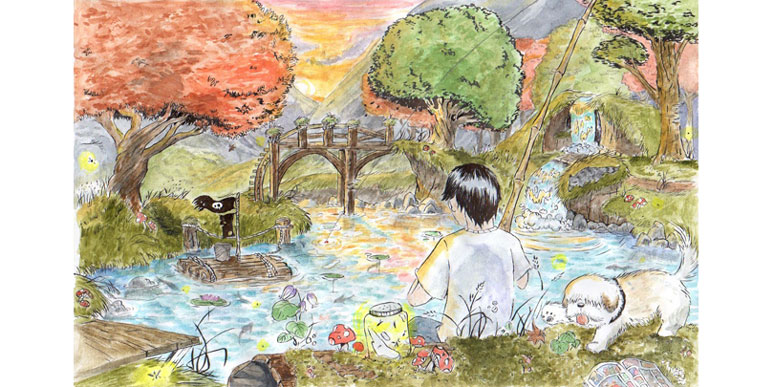
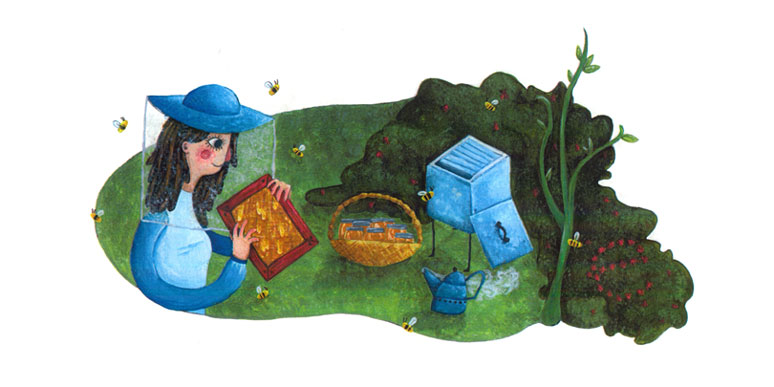
There's little in life finer than pitting youths against each other in battle, which Google's annual "Doodle 4 Google" contest clearly appreciates. The competition takes thousands of Google logo doodle entries and pits them down from thousands to 50, one per US State, and organizes those entries by grade level. The images are then put online for the world to enjoy, as well as to vote on -- out of the five doodles with the highest votes, one national winner is selected, which Google plans on revealing on May 22nd in New York City. This year's theme is "Best Day Ever," which means outdoor activities to one Maine-based middle schooler (seen above), and hanging out with bees to a Michigan-based high school student. Of course, there are 48 other excellent pieces to peek at before casting your vote, though you've gotta get in there before May 10th at 11:59ET.

Filed under: , ,

Comments

Source: Google, 2013 Doodle 4 Google Voting Page

Source: http://feeds.engadget.com/~r/weblogsinc/engadget/~3/hGn0cZOkZn4/

the fray national anthem dallas tornado oikos kentucky wildcats oakland school shooting nike nfl jerseys katie couric